
Fumigation in Douala: How to Permanently Eliminate Cockroaches, Mosquitoes, and Other Pests?
The presence of cockroaches, mosquitoes, ants, flies, or other pests can quickly become a major problem in a home or commercial premises. Due to heat, humidity, stagnant water, and the availability of food, certain urban areas provide ideal conditions for their development. Hiring a fumigation service in Douala makes it possible to treat an infestation in a structured manner while implementing appropriate preventive measures.
An infestation should never be considered a simple visual nuisance. Pests can contaminate surfaces, damage food supplies, disturb occupants, and harm a company’s reputation. In restaurants, hotels, food businesses, offices, warehouses, or residential buildings, their presence may also lead to complaints and a loss of customer confidence.
However, randomly spraying an insecticide is generally not enough to solve the problem permanently. Effective pest control relies on several steps: identifying the pest, assessing the level of infestation, preparing the premises, selecting the appropriate treatment, and implementing preventive measures.
Discover how to organize a professional fumigation service and prevent pests from returning to your premises in Douala.
What Is Fumigation?
In everyday language, the term fumigation is often used to describe various professional treatments against insects and other unwanted organisms.
Depending on the type of pest and the layout of the premises, the treatment may include:
- spraying an insecticide;
- applying cockroach gel;
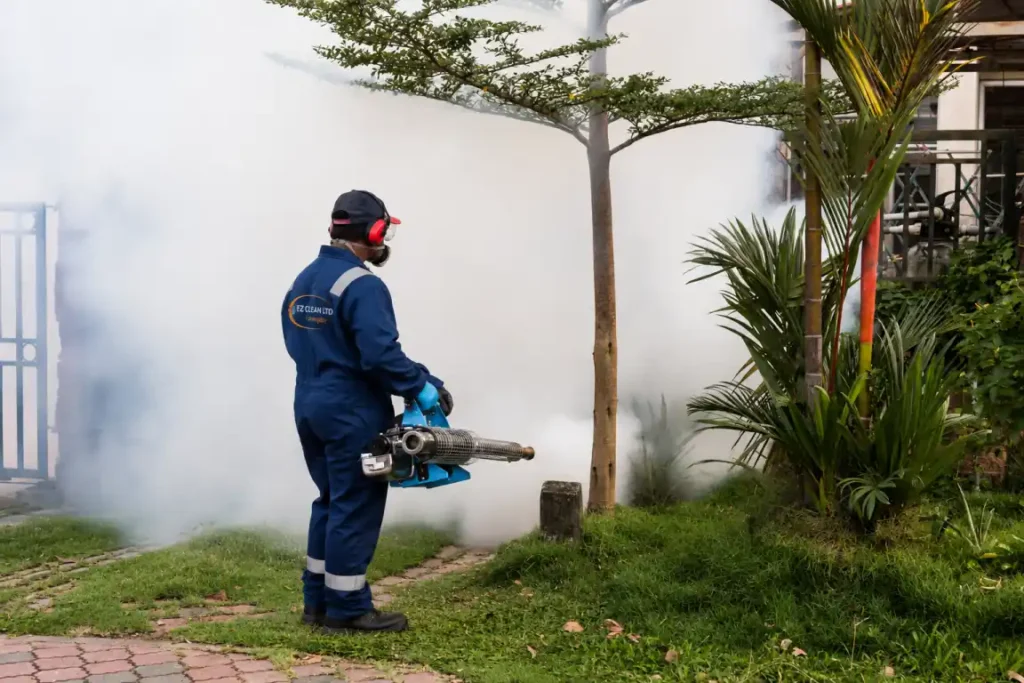
- fogging with fine droplets;
- treating cracks and pest pathways;
- installing traps;
- treating breeding areas;
- additional rodent control measures;
- post-treatment monitoring.
Fumigation in Douala should always be tailored to the identified problem. A mosquito treatment will not be organized in the same way as an intervention against cockroaches, ants, or rodents.
In some cases, the treatment relies primarily on the targeted application of products rather than dispersing a fog throughout the entire premises.
Why Do Pests Develop Indoors?
Pests mainly look for three things:
- food;
- water;
- shelter.
A building can therefore become attractive when food waste remains accessible, leaks are not repaired, or certain areas are rarely cleaned.
Factors that commonly encourage infestations include:
- poorly sealed garbage bins;
- leftover food;
- crumbs beneath furniture;
- cardboard boxes stored for long periods;
- damp plumbing systems;
- stagnant water;
- cracks in walls;
- gaps beneath doors;
- spaces behind appliances;
- cluttered storage rooms;
- poor storage practices.
Heat and humidity can also accelerate the reproduction of certain species. For this reason, cleaning, sanitation, and preventive measures should always accompany chemical treatment.
What Are the Most Common Pests in Douala?
Cockroaches
Cockroaches thrive in dark, damp places close to food sources.
They can commonly be found in:
- kitchens;
- restaurants;
- storage rooms;
- drainage systems;
- bathrooms;
- waste disposal areas;
- under sinks;
- household appliances;
- food warehouses.
They usually hide during the day and become more active at night.
Their presence can contaminate surfaces and damage the establishment’s reputation.
Mosquitoes
Mosquitoes breed primarily in areas containing stagnant water.
The main areas to monitor include:
- buckets left outdoors;
- blocked gutters;
- used tires;
- open containers;
- drainage channels;
- water collection tanks;
- poorly drained areas;
- damp gardens.
Mosquito control should therefore combine the elimination of breeding sites with targeted treatment of frequently occupied areas.
Flies
Flies are attracted to waste, organic matter, and exposed food.
They are particularly problematic in:
- restaurants;
- kitchens;
- markets;
- food stores;
- hotels;
- garbage disposal areas;
- food preparation zones.
Proper waste management is essential to limit their presence.
Ants
Ants can enter buildings through extremely small cracks.
They often follow a regular path between their nest and a food source.
Treating only the visible ants is not always sufficient. It may be necessary to identify their pathways and treat the colonies.
Rodents
Although rodent control differs from fumigation, rodents are often included in comprehensive pest management programs.
They can damage:
- electrical cables;
- packaging materials;
- food supplies;
- partitions;
- equipment.
Treatment generally involves identifying entry points, installing secure bait stations, and improving storage conditions.
What Are the Signs of an Infestation?
A prompt intervention is recommended as soon as the first signs appear.
Presence of Live Insects
Regularly seeing cockroaches, ants, or other insects is the most obvious sign.
When cockroaches are visible during the daytime, it may indicate either a large infestation or disturbed hiding places.
Droppings
Small dark droppings may be found:
- inside cabinets;
- along walls;
- behind appliances;
- under sinks;
- inside storage rooms.
These signs should always be considered during the inspection.
Unusual Odors
A significant infestation may produce persistent unpleasant odors, particularly in enclosed or damp areas.
Eggs, Larvae, or Casings
Finding eggs, larvae, cocoons, or insect casings may indicate active breeding.
Damaged Packaging
Holes, bite marks, or tears in bags, cardboard boxes, and packaging may indicate the presence of rodents or insects.
Noises in Ceilings or Partitions
Scratching noises at night may indicate rodent activity.
An Increase in Bites
An unusual increase in insect bites in a home, hotel, or workplace may require a thorough inspection.
Why Do Household Treatments Often Fail?
Many people attempt to eliminate pests using aerosol sprays purchased in stores.
These products may temporarily reduce the number of visible insects, but they do not always eliminate:
- eggs;
- larvae;
- nests;
- colonies;
- hidden insects;
- breeding sources.
Improper use may also drive insects into other rooms.
For example, cockroaches may leave the treated area and hide inside cracks, equipment, or neighboring premises.
A professional therefore seeks to identify the source of the problem before applying any treatment.
How Does Professional Fumigation in Douala Work?
1. Site Inspection
The first step consists of inspecting the premises.
The technician will identify:
- the pests present;
- their movement routes;
- food sources;
- water sources;
- cracks;
- breeding sites;
- the level of infestation;
- risks related to the client’s activities.
This inspection makes it possible to select the most appropriate treatment method.
2. Pest Identification
Not all insects respond to treatments in the same way.
It is therefore essential to accurately identify the species or, at the very least, the category of pest involved.
Incorrect identification may lead to an ineffective treatment.
3. Assessing the Level of Infestation
The professional determines whether the infestation is:
- localized;
- moderate;
- severe;
- widespread.
This assessment influences:
- the quantity of product required;
- the number of treatment areas;
- the duration of the intervention;
- the need for a follow-up visit;
- the preventive measures to be implemented.
4. Preparing the Premises
The client receives instructions before the intervention.
Depending on the treatment, it may be necessary to:
- store food items away;
- seal food products tightly;
- empty certain cupboards;
- clear areas along the walls;
- move furniture;
- cover sensitive equipment;
- remove kitchen utensils;
- relocate pets;
- clear the treatment areas;
- take out the garbage.
Proper preparation improves the effectiveness of the treatment and protects the items inside the premises.
5. Choosing the Treatment Method
The service provider selects the most appropriate technique according to the type of pest and the environment.
The treatment methods may include:
- applying insecticide gel;
- targeted spraying;
- fogging;
- treating cracks and crevices;
- installing traps;
- treating drainage systems;
- treating outdoor areas;
- installing secure rodent bait stations.
The methods used in a kitchen, hotel room, warehouse, or office will not necessarily be the same.
6. Securing the Intervention
Before treatment begins, access to the premises may be restricted and occupants informed.
Technicians must use appropriate personal protective equipment, including:
- gloves;
- safety goggles;
- protective masks;
- protective coveralls;
- safety shoes.
The manufacturer’s instructions and the required re-entry period must be strictly followed.
7. Applying the Treatment
The treatment is applied to the areas identified during the inspection.
Particular attention is generally given to:
- under sinks;
- baseboards;
- cracks;
- drainage systems;
- storage rooms;
- waste disposal areas;
- under appliances;
- outdoor areas;
- entry points.
The objective is not to spray every surface indiscriminately, but to target the areas where treatment is most effective.
8. Ventilation and Reopening the Premises
After the intervention, the premises should be ventilated according to the recommendations provided by the technician.
Occupants must not re-enter the treated areas until the specified waiting period has elapsed.
Surfaces used for food preparation may require specific cleaning before being used again.
9. Post-Treatment Inspection
A follow-up inspection is carried out to verify the effectiveness of the intervention.
The professional may check for:
- a reduction in pest activity;
- the presence of new insects;
- the condition of the traps;
- persistent high-risk areas;
- the need for an additional treatment.
In cases of severe infestation, several interventions may be required.
How Should You Prepare Your Premises Before Fumigation?
Proper preparation greatly increases the chances of success.
Store Food Properly
Food products should be:
- placed in sealed containers;
- stored inside protected cupboards;
- removed from worktops;
- kept away from treatment areas.
Open or contaminated food should be discarded.
Clean Dirty Areas
Before treatment, it is advisable to remove:
- crumbs;
- grease;
- waste;
- unnecessary packaging;
- residue beneath appliances.
Treatment is more effective when there are few alternative food sources available for pests.
Empty Garbage Bins
Garbage bins should be emptied, cleaned, and properly closed after the intervention.
Clear Areas Along the Walls
Furniture may be moved slightly away from the walls to provide easier access to baseboards and cracks.
Protect Sensitive Items
Electronic equipment, documents, kitchen utensils, and other sensitive items should be protected according to the service provider’s instructions.
Arrange for the Temporary Absence of Occupants
Depending on the treatment method, people and pets may need to leave the premises for a specified period.
The instructions provided by the professional must be followed carefully.
What Should You Do After Fumigation?
Respect the Re-Entry Period
Do not enter the premises before the authorized time.
The waiting period varies depending on the product used, the treatment method, and the level of ventilation.
Ventilate the Rooms
Doors and windows should be opened when authorized by the service provider.
Clean Food Preparation Surfaces
Worktops, tables, and surfaces that come into contact with food should be cleaned before use.
Do Not Immediately Wash Treated Areas
Some treatments must remain in place for several days in order to continue working effectively.
The technician will indicate which surfaces may be cleaned immediately and which should not.
Monitor Pest Activity
It is normal to continue seeing a few insects after treatment, especially as they leave their hiding places.
However, persistent or significant pest activity should be reported to the service provider.
How Can You Prevent Cockroaches from Returning?
Store Food in Sealed Containers
Food products should be protected, especially:
- sugar;
- flour;
- cereals;
- biscuits;
- pet food;
- opened food products.
Clean Under Equipment
The areas beneath refrigerators, stoves, furniture, and freezers should be cleaned regularly.
Repair Leaks
Cockroaches need water to survive.
Leaks under sinks, faucets, or plumbing fixtures should therefore be repaired.
Seal Cracks
Holes, damaged seals, and openings around pipes should be sealed.
Reduce Cardboard Storage
Cardboard boxes provide hiding places for pests and can facilitate their movement.
It is advisable not to store them unnecessarily in storage areas.
Manage Waste Properly
Garbage bins should be:
- kept closed;
- emptied regularly;
- washed;
- kept away from food preparation areas.
How Can You Prevent Mosquitoes from Returning?
Eliminate Stagnant Water
The following should be emptied regularly:
- buckets;
- plant saucers;
- flower pots;
- tires;
- containers;
- open water tanks.
Clean Gutters and Drainage Channels
Drainage systems should remain clear to prevent water from accumulating.
Install Mosquito Nets
Mosquito nets reduce the entry of insects while still allowing proper ventilation.
Maintain Green Areas
Tall grass and very damp areas can encourage mosquito activity.
Monitor Water Sources
Water tanks should be properly sealed, and outdoor leaks should be repaired.
Which Establishments Need a Regular Pest Control Program?
A one-time intervention may be sufficient for a lightly infested home. However, some facilities require regular monitoring.
This particularly includes:
- restaurants;
- hotels;
- bakeries;
- supermarkets;
- warehouses;
- food processing industries;
- hospitals;
- schools;
- residential buildings;
- offices;
- markets;
- industrial sites.
A preventive program makes it possible to detect signs of infestation early and intervene before the problem becomes severe.
How to Develop a Pest Prevention Plan?
An effective plan may include:
- regular inspections;
- mapping high-risk areas;
- trap monitoring;
- cleaning storage rooms;
- waste management;
- sealing entry points;
- eliminating stagnant water;
- staff awareness training;
- scheduled treatments;
- monitoring reports.
Within a company, employees should also be encouraged to report any suspicious pest activity as quickly as possible.
One-Time Fumigation or a Regular Contract: Which Should You Choose?
One-Time Intervention
This option is suitable when:
- the problem is recent;
- the infestation is limited;
- the need results from a specific event;
- the building must be treated before occupancy.
Regular Service Contract
This option is recommended when:
- the premises handle food products;
- the business receives large numbers of visitors;
- the environment presents recurring risks;
- pests regularly return;
- multiple buildings require monitoring.
A service contract may include inspections and treatments carried out monthly, quarterly, or at a frequency adapted to the client’s activity.
How Much Does Fumigation Cost in Douala?
The price depends on several factors:
- the size of the premises;
- the type of pest;
- the level of infestation;
- the number of rooms;
- the nature of the business activity;
- outdoor areas;
- the treatment method used;
- the number of interventions required;
- site accessibility.
A small residential intervention does not require the same resources as a treatment carried out in a hotel, warehouse, or industrial facility.
A site visit or a detailed consultation makes it possible to prepare a tailored quotation.
How to Choose a Fumigation Company in Douala?
The service provider should be selected carefully.
In particular, verify:
- their experience;
- their ability to identify pests;
- the training of their technicians;
- the treatment methods they offer;
- their safety measures;
- the clarity of their instructions;
- their post-treatment follow-up;
- their available references;
- the accuracy of their quotation.
A professional company should clearly explain what will be treated, how the premises should be prepared, and which preventive measures will be required.
Why Choose EZ CLEAN LTD for Your Fumigation in Douala?
EZ CLEAN LTD supports homeowners, businesses, hotels, restaurants, retail stores, public institutions, and industries in the fight against pests.
Our approach begins with identifying the problem and analyzing high-risk areas.
Depending on the situation, we implement tailored solutions to control:
- cockroaches;
- mosquitoes;
- ants;
- flies;
- certain crawling and flying insects;
- rodents as part of a complementary pest management program.
Our interventions are based on:
- a preliminary inspection;
- thorough preparation;
- treatment methods adapted to the site;
- clear safety instructions;
- targeted treatment;
- preventive recommendations;
- quality follow-up.
Our objective is not only to reduce visible pests. We also seek to identify the factors that encourage their presence in order to help our clients prevent future infestations.
FAQ About Fumigation in Douala
Does fumigation permanently eliminate cockroaches?
A professional treatment can significantly reduce or eliminate an infestation. However, the result also depends on eliminating food sources, water sources, and hiding places. Follow-up treatments may be necessary.
Do you have to leave the premises during treatment?
It depends on the treatment method used. For certain treatments, people and pets must leave the premises for a specified period. The service provider will communicate the necessary instructions before the intervention.
How many treatments are required?
A light infestation can sometimes be treated in a single intervention. A severe infestation may require several visits to target the different stages of the pests’ life cycle.
How should you prepare a kitchen before fumigation?
Food should be protected, utensils stored away, garbage bins emptied, residues cleaned, and the areas beneath appliances and along the walls cleared.
Can the premises be cleaned immediately after treatment?
Some surfaces, particularly those that come into contact with food, may be cleaned. However, certain treated areas should not be washed immediately. The technician’s instructions should always be followed.
Does fumigation also treat mosquitoes?
Yes. Certain treatment methods effectively target adult mosquitoes. However, stagnant water and breeding sites must also be eliminated to achieve long-lasting results.
How often should preventive treatment be carried out?
The frequency depends on the type of premises, the activity carried out, and the level of risk. Restaurants, hotels, and warehouses may require a regular pest control program, while residential properties generally require less frequent interventions.
Conclusion
Fumigation in Douala is an effective solution for controlling cockroaches, mosquitoes, ants, flies, and other pests when carried out using professional methods.
A long-lasting intervention begins with identifying the pest and inspecting the premises. It continues with preparing the site, applying the appropriate treatment, and following all safety instructions. A post-treatment inspection then makes it possible to verify the results and determine whether a second intervention is required.
However, treatment alone is not always enough. Prevention plays an essential role. Proper waste management, regular cleaning, eliminating stagnant water, sealing cracks, and protecting food supplies significantly reduce the risk of reinfestation.
Have you noticed the presence of cockroaches, mosquitoes, or other pests in your home or business? EZ CLEAN LTD provides a professional **fumigation service in Douala**, tailored to the type of pest, the layout of your premises, and the level of infestation. Request an inspection and a personalized quotation to restore a cleaner, healthier, and better-protected environment.