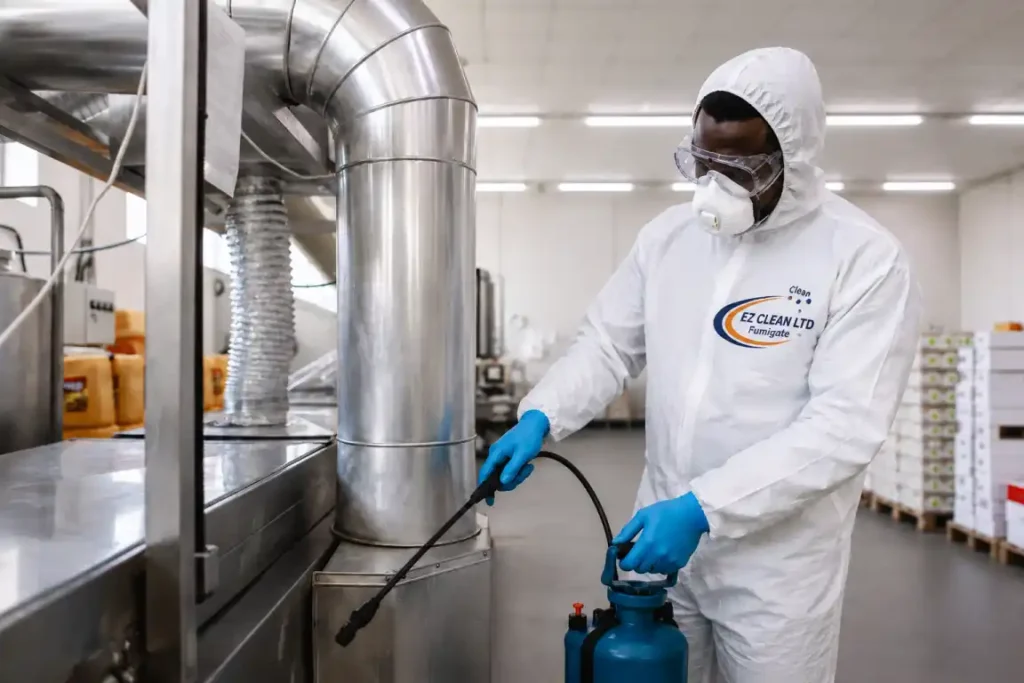
Industrial Cleaning in Cameroon: Methods, Industries Served, and Safety Precautions
Industrial cleaning in Cameroon is a specialized service that involves maintaining, degreasing, dust removal, disinfecting, and restoring complex professional environments. Unlike standard office or residential cleaning, it is carried out in facilities where technical constraints, occupational hazards, and hygiene requirements are significantly higher.
Factories, warehouses, oil sites, workshops, technical areas, logistics platforms, and production facilities require tailored cleaning methods, professional equipment, and trained personnel.
In these environments, poorly planned cleaning operations can cause accidents, damage machinery, or disrupt production. For this reason, industrial cleaning should be entrusted to an experienced company capable of assessing risks and implementing a precise cleaning protocol.
This guide presents the main industrial cleaning methods, the industries concerned, the equipment used, and the essential precautions required to ensure safe and effective industrial cleaning operations in Cameroon.
What Is Industrial Cleaning?
Industrial cleaning encompasses all operations designed to ensure the cleanliness, hygiene, and safety of production facilities, warehouses, and technical areas.
It may involve cleaning:
- industrial floors;
- machinery;
- production lines;
- walls;
- ceilings;
- ductwork;
- tanks;
- storage areas;
- parking facilities;
- outdoor surfaces;
- technical installations.
Industrial cleaning in Cameroon must take into account the client’s business activity, the products handled, the equipment installed, and the specific risks associated with each site.
For example, a food processing plant cannot be cleaned in the same way as a warehouse, a mechanical workshop, or an oil production facility.
Why Is Industrial Cleaning Essential?
In an industrial environment, dirt is not merely an aesthetic concern. It can directly affect safety, production efficiency, and the lifespan of equipment.
Preventing Accidents
Oil, grease, dust, liquids, and waste can make floors slippery or obstruct walkways.
Regular cleaning helps reduce:
- falls;
- slips;
- injuries;
- fire hazards;
- obstructions in traffic routes.
Cleanliness therefore becomes a key element of an organization’s occupational risk prevention policy.
Protecting Equipment
Dust, residues, oil, and deposits can gradually damage machinery.
They may cause:
- overheating;
- reduced performance;
- premature wear;
- equipment breakdowns;
- higher maintenance costs.
Professional maintenance therefore helps extend the lifespan of industrial installations.
Maintaining Production Quality
In industries such as food processing, pharmaceuticals, and cosmetics, poor hygiene can contaminate raw materials or finished products.
Industrial cleaning helps maintain production conditions that comply with company requirements and applicable industry standards.
Improving Working Conditions
A clean, organized, and properly maintained workplace makes employees’ work easier.
Workers can move around more safely and perform their tasks in a cleaner and more comfortable environment.
Enhancing the Company’s Image
The cleanliness of a factory, warehouse, or technical facility reinforces the company’s professional image among partners, clients, investors, and regulatory authorities.
Which Industries Require Industrial Cleaning in Cameroon?
Industrial cleaning in Cameroon serves a wide range of economic sectors.
Manufacturing Plants
Factories regularly generate waste, dust, raw material residues, and grease deposits.
Areas requiring maintenance may include:
- production lines;
- workshops;
- packaging areas;
- technical rooms;
- locker rooms;
- loading docks;
- storage areas.
Cleaning operations are often scheduled outside production hours to avoid disrupting manufacturing activities.
Warehouses and Logistics Platforms
Warehouses are exposed to dust, packaging materials, tire marks, waste, and continuous goods handling.
Cleaning services may include:
- mechanized sweeping;
- floor washing;
- dust removal from shelving;
- loading dock cleaning;
- maintenance of traffic areas;
- waste disposal.
A clean warehouse also facilitates inventory management and improves employee safety.
Oil and Energy Facilities
Oil sites, fuel stations, storage depots, and energy facilities require extremely strict safety precautions.
The risks may involve:
- hydrocarbons;
- flammable products;
- vapors;
- pressurized equipment;
- restricted-access areas.
Cleaning these facilities requires trained personnel, appropriate personal protective equipment, and strict compliance with safety procedures.
Mechanical Workshops
Automotive, industrial, and maintenance workshops frequently generate oil, grease, and metal dust.
Cleaning services may include:
- floor degreasing;
- tool cleaning;
- maintenance of inspection pits;
- wall washing;
- waste management;
- cleaning storage areas.
Food Processing Industries
In the food industry, cleaning procedures must minimize contamination risks.
Cleaning may include:
- floors;
- work surfaces;
- equipment;
- cold storage rooms;
- processing areas;
- packaging surfaces.
Specific products and cleaning protocols must be used to prevent any hazardous contact with food products.
Pharmaceutical and Cosmetic Industries
These industries often require exceptionally high hygiene standards.
Cleaning may involve:
- thorough disinfection;
- dust control;
- strict compliance with cleaning procedures;
- the use of products compatible with sensitive environments.
Construction Sites
After construction work, sites may contain:
- construction debris;
- dust;
- paint stains;
- cement residues;
- building material waste;
- residues on floors and windows.
Industrial post-construction cleaning prepares these facilities for immediate use.
Ports and Logistics Areas
Port facilities and transit zones require regular maintenance due to continuous cargo handling, dust accumulation, oil residues, and waste generation.
What Are the Main Industrial Cleaning Methods?
The choice of cleaning method depends on the type of dirt, the surface to be cleaned, the level of risk, and the site’s operational constraints.
Industrial Sweeping
Sweeping may be carried out manually or mechanically.
It is used to remove:
- dust;
- small debris;
- solid residues;
- packaging materials.
For large facilities, industrial sweepers provide particularly effective cleaning.
Mechanical Floor Cleaning
Scrubber dryers wash, scrub, and recover dirty water in a single pass.
They are ideal for:
- warehouses;
- factories;
- logistics centers;
- parking areas;
- large commercial facilities.
This method provides fast and consistent cleaning results.
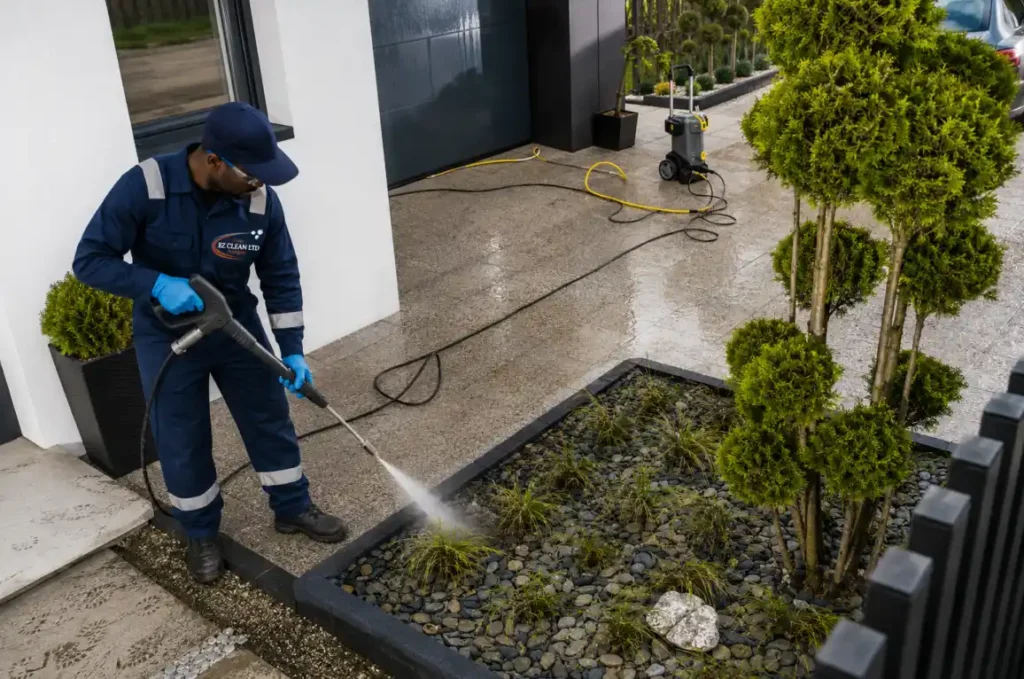
High-Pressure Cleaning
High-pressure cleaning uses a powerful water jet to remove stubborn dirt.
It is particularly suitable for:
- outdoor floors;
- walls;
- parking areas;
- heavy-duty equipment;
- heavily soiled areas.
The water pressure must be adjusted appropriately to avoid damaging surfaces.
Industrial Degreasing
Degreasing removes oils, grease, and production residues.
It may be carried out using:
- degreasing agents;
- hot water;
- steam;
- professional cleaning equipment.
The choice of cleaning product must take into account both the material being cleaned and the safety of the operators.
Steam Cleaning
Steam cleaning loosens dirt while reducing the need for chemical products.
It is commonly used on specific surfaces, equipment, and areas requiring disinfection.
Industrial Vacuum Cleaning
Industrial vacuum cleaners are designed to collect:
- fine dust;
- liquids;
- heavy residues;
- production particles.
They are more powerful and durable than standard vacuum cleaners.
Machine Cleaning
Cleaning industrial machinery requires great care.
Before any cleaning operation, it may be necessary to:
- shut down the equipment;
- disconnect the power supply;
- secure the work area;
- follow the manufacturer’s instructions;
- protect sensitive components.
Cleaning personnel must avoid any action that could damage circuits, motors, or control systems.
Industrial Disinfection
Disinfection complements the cleaning process by reducing the presence of microorganisms.
It is particularly important in:
- the food processing industry;
- the pharmaceutical industry;
- medical facilities;
- the cosmetics industry;
- food logistics operations.
A disinfectant should only be applied after all visible dirt has been removed.
High-Level Cleaning
Certain areas are difficult to access, including:
- roof structures;
- ductwork;
- ceilings;
- steel structures;
- large windows;
- technical installations.
These operations may require extension poles, scaffolding, elevated work platforms, or aerial lifts.
They must be carried out by personnel trained in working at height.
What Equipment Is Used for Industrial Cleaning?
An industrial cleaning company must have appropriate professional equipment.
The equipment may include:
- industrial sweepers;
- scrubber dryers;
- single-disc floor machines;
- industrial vacuum cleaners;
- high-pressure cleaners;
- steam cleaners;
- carpet extractors;
- pumps;
- squeegees;
- telescopic poles;
- scaffolding;
- aerial work platforms.
Cleaning personnel may also wear:
- gloves;
- safety shoes;
- helmets;
- safety goggles;
- protective masks;
- protective coveralls;
- high-visibility vests;
- safety harnesses.
The choice of personal protective equipment depends on the level of risk at the worksite.
What Precautions Should Be Taken Before an Industrial Cleaning Operation?
Industrial cleaning should never be improvised.
Carry Out a Technical Site Inspection
Before preparing a quotation, the cleaning company should inspect the site.
This inspection helps identify:
- the areas to be cleaned;
- the types of dirt and contamination;
- the machinery on site;
- potential hazards;
- access conditions;
- the equipment required;
- the most suitable working schedule.
Assess the Risks
Every cleaning operation should be preceded by a risk assessment.
The risks may involve:
- chemical products;
- electricity;
- machinery;
- working at height;
- slippery floors;
- hydrocarbons;
- confined spaces;
- heavy loads.
This assessment makes it possible to define the appropriate preventive measures.
Secure the Work Area
It may be necessary to:
- install safety signage;
- restrict access;
- shut down certain machines;
- disconnect power supplies;
- protect equipment;
- mark wet floors.
Train Cleaning Personnel
Cleaning staff should be familiar with:
- the products used;
- the equipment operated;
- safety procedures;
- site-specific risks;
- emergency procedures;
- the client’s internal regulations.
Follow the Product Technical Data Sheets
Chemical products should always be used according to the manufacturer’s recommendations.
The following must be respected:
- recommended dosages;
- required contact times;
- handling precautions;
- storage conditions;
- product incompatibilities.
Chemical products should never be mixed without first verifying their compatibility.
Plan the Cleaning Operation
Industrial cleaning may be carried out:
- during production shutdowns;
- outside normal working hours;
- during weekends;
- during maintenance periods;
- in successive work zones.
Proper planning helps minimize production interruptions.
How to Prepare an Industrial Cleaning Specification?
An industrial cleaning specification defines the client’s expectations and the service provider’s commitments.
It should include:
- a description of the site;
- the areas to be cleaned;
- the cleaning methods to be used;
- the frequency of cleaning operations;
- working hours;
- approved cleaning products;
- the equipment required;
- safety requirements;
- quality control criteria;
- waste management procedures;
- incident response procedures.
A detailed cleaning specification makes it easier to monitor service quality and reduces the risk of misunderstandings.
How Can the Quality of Industrial Cleaning Services Be Monitored?
Quality control may include:
- inspection checklists;
- site inspections;
- service reports;
- before-and-after photographs;
- a communication logbook;
- regular review meetings;
- corrective actions.
The client should be able to report any issue promptly.
The cleaning company should then propose an appropriate solution and verify its effectiveness.
How to Choose an Industrial Cleaning Company in Cameroon?
Several criteria should be carefully considered.
The Service Provider’s Experience
The provider should have a solid understanding of the specific requirements of factories, warehouses, workshops, and technical facilities.
Staff Training
Cleaning personnel should be properly trained in industrial cleaning methods and safety procedures.
Available Equipment
The company should have professional machines suitable for large surfaces and industrial-grade contamination.
Insurance Coverage
The service provider should be adequately insured against accidents or damage that may occur during cleaning operations.
References
Previous projects and client references help assess the company’s reliability and expertise.
The Quality of the Quotation
The quotation should clearly specify:
- the services included;
- the cleaning methods;
- the equipment to be used;
- the personnel assigned;
- working schedules;
- the cleaning products;
- the safety measures implemented.
The lowest price is not always the best option. Safety, quality, and service continuity should always remain the top priorities.
Why Choose EZ CLEAN LTD for Industrial Cleaning in Cameroon?
EZ CLEAN LTD supports businesses in maintaining their industrial facilities, warehouses, technical areas, and professional installations.
Our approach is based on a thorough assessment of every working environment.
We implement customized cleaning solutions by considering:
- the client’s industry;
- surface areas;
- the level of contamination;
- the equipment on site;
- production constraints;
- safety requirements.
Our services are built upon:
- qualified personnel;
- professional equipment;
- tailored cleaning methods;
- carefully selected cleaning products;
- regular quality monitoring;
- a personalized organization.
Our objective is to help our clients maintain clean, safe, and high-performing work environments while minimizing disruptions to their operations.
FAQ About Industrial Cleaning in Cameroon
What is industrial cleaning?
Industrial cleaning includes cleaning, degreasing, dust removal, disinfection, and restoration operations carried out in factories, warehouses, workshops, and technical facilities.
Which industries require industrial cleaning in Cameroon?
Industrial cleaning is widely used in factories, warehouses, food processing industries, mechanical workshops, oil facilities, logistics platforms, ports, construction sites, and pharmaceutical industries.
What equipment is used?
Industrial cleaning companies use scrubber dryers, industrial sweepers, industrial vacuum cleaners, single-disc machines, high-pressure washers, steam cleaning equipment, and personal protective equipment.
Can industrial cleaning be performed during production?
It depends on the facility. Some cleaning operations can be carried out while production continues, whereas others require machinery to be shut down or cleaning to be scheduled outside normal working hours.
Why is a technical site inspection necessary?
A site inspection allows the cleaning company to assess surface areas, risks, contamination levels, required equipment, and access constraints before preparing an appropriate quotation.
How can I obtain an industrial cleaning quotation in Cameroon?
It is recommended to provide the site’s surface area, business activity, areas to be cleaned, desired cleaning frequency, available working hours, and any specific risks. A technical site inspection can then be conducted to prepare an accurate quotation.
Conclusion
Industrial cleaning in Cameroon is a highly specialized service that requires experience, precision, and strict compliance with safety regulations.
Factories, warehouses, oil facilities, workshops, technical areas, and logistics platforms all present unique operational challenges. Every cleaning operation should therefore be preceded by a site assessment, a risk analysis, and detailed planning.
The choice of cleaning methods, products, and equipment depends on the nature of the surfaces and the type of contamination to be removed. Cleaning personnel must also be properly trained and equipped with appropriate personal protective equipment.
By entrusting your facility to a qualified industrial cleaning provider, you help prevent workplace accidents, protect your equipment, improve working conditions, and maintain the performance of your operations.
Looking for a reliable company to clean your factory, warehouse, workshop, or technical facility in Cameroon? EZ CLEAN LTD provides customized solutions, professional equipment, and quality-focused services tailored to your operational requirements. Contact us today to schedule a technical site inspection and receive a customized quotation for a safe and efficient industrial cleaning program.