Silo Cleaning in Cameroon: Frequency and Key Steps
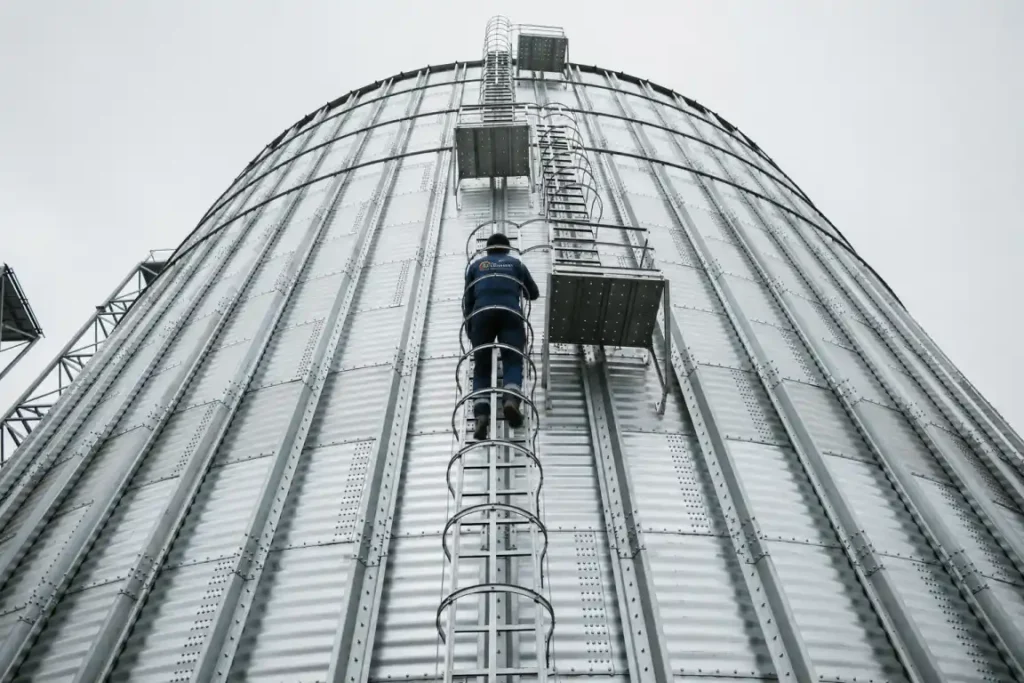
Silo cleaning in Cameroon is an essential operation for businesses that store grains, flour, animal feed, agricultural raw materials, or other bulk products. Over successive filling and emptying cycles, dust, residues, deposits, and aged materials can accumulate on the walls, at the bottom of the silo, and within the transfer equipment.
These accumulations are not merely a cleanliness issue. They can affect the quality of stored products, encourage the development of pests, hinder the flow of materials, and increase certain operational risks.
In a climate characterized by heat and humidity, maintaining strict silo hygiene becomes particularly important. Businesses should therefore implement a cleaning, inspection, and preventive maintenance program adapted to the type of products stored, the frequency of use, and the condition of the equipment.
Why should a silo be cleaned? How often should cleaning be carried out? How should the operation be prepared, and what are the main steps involved? This guide presents the essential information to know before entrusting this task to a specialized company.
What Is Silo Cleaning?
Silo cleaning includes all operations aimed at removing residual products, dust, deposits, compacted materials, and any contamination present within a storage facility.
This operation may involve:
- the interior walls;
- the bottom of the silo;
- the hoppers;
- the ducts;
- the extraction systems;
- the screw conveyors;
- the bucket elevators;
- the filters;
- the grilles;
- the loading and unloading areas.
Silo cleaning in Cameroon must be adapted to the site’s configuration, the type of product stored, and the identified risks.
A silo containing corn, wheat, rice, cocoa, flour, or animal feed does not necessarily present the same constraints. The techniques and products used must therefore be selected carefully.
Why Is Silo Cleaning Essential?
Preserve the Quality of Stored Products
Residues left behind after emptying can mix with the new products introduced into the silo.
When these materials are old, damp, deteriorated, or contaminated, they can affect the quality of the entire stock.
Regular cleaning helps reduce:
- mixing between different batches;
- contamination of new products;
- the presence of degraded materials;
- the spread of unpleasant odors;
- deterioration in storage quality.
In the food and agricultural sectors, this level of vigilance helps preserve product compliance and commercial value.
Reduce the Presence of Pests
Residues of grains, flour, and organic matter can attract or feed various pests.
These may include:
- insects;
- weevils;
- moths;
- rodents;
- larvae.
Even small quantities of product left in corners, ducts, or equipment can encourage their development.
Silo cleaning should therefore be integrated into a comprehensive prevention strategy that also includes inspection, fumigation when necessary, and regular monitoring of the facilities.
Prevent Mold and Fermentation
Heat and humidity can accelerate the deterioration of organic materials.
When residues remain attached to the walls or bottom of a silo, they may absorb moisture, form compact masses, and encourage the growth of mold or fermentation.
These situations can lead to:
- unusual odors;
- product deterioration;
- loss of quality;
- storage difficulties;
- health risks.
Cleaning and thoroughly drying all surfaces help minimize these issues.
Improve Material Flow
Bulk products can become compacted, agglomerate, or adhere to the walls.
These accumulations may cause:
- a reduction in usable storage capacity;
- poor product flow;
- the formation of blockages;
- difficulties during unloading;
- production downtime.
A professional cleaning service helps clear obstructed areas and restore smoother operation.
Prevent Equipment Failures and Operational Downtime
Dust and residues may also accumulate inside mechanical equipment.
They can interfere with the operation of:
- conveyors;
- extraction screws;
- filters;
- sensors;
- aeration systems;
- bucket elevators.
Silo cleaning therefore contributes to equipment maintenance and helps reduce unexpected downtime.
Improve Site Safety
Certain fine dust particles can create hazardous conditions when they accumulate in large quantities.
Cleaning should therefore remove deposits from:
- machinery;
- platforms;
- cables;
- electrical equipment;
- walkways;
- elevated surfaces.
A clean silo also improves visibility, movement, and working conditions for maintenance teams.
Which Industries Need Silo Cleaning in Cameroon?
Silo cleaning is required across several industries.
Flour Mills
Flour mills store and process grains as well as flour.
The fine dust generated makes it necessary to implement a regular cleaning program for silos, ducts, and transfer equipment.
Food Processing Industries
Food processing companies use silos to store:
- corn;
- wheat;
- rice;
- sugar;
- powders;
- production ingredients.
The quality of cleaning directly influences the hygiene and safety of processed products.
Breweries and Beverage Industries
Breweries may use silos to store malt, grains, or other raw materials.
Residues must be removed to maintain consistent quality between production cycles.
Animal Feed Manufacturers
These companies store grains, oilseed meals, flour, and blends used in animal feed production.
Cleaning helps prevent formula mixing, batch contamination, and pest development.
Agricultural Cooperatives and Farms
Agricultural organizations use silos to preserve harvested crops before marketing or processing.
Proper maintenance helps reduce storage losses.
Ports and Logistics Platforms
Port and logistics facilities may operate silos for the temporary storage of imported or exported products.
Rigorous maintenance is necessary due to the high frequency of product handling.
How Often Should a Silo Be Cleaned?
There is no single cleaning frequency that applies to all silos.
The cleaning schedule depends mainly on:
- the type of product stored;
- the storage duration;
- the number of filling cycles;
- the level of dust;
- humidity;
- the risk of contamination;
- the overall condition of the facility.
After Every Product Change
Cleaning is strongly recommended whenever a silo is to be used for storing a different material.
This operation helps reduce the risk of mixing two products, two grades, or two formulations.
It is particularly important when the silo changes:
- from one grain to another;
- from one type of flour to another;
- from a food product to an animal feed product;
- from one formulation to another.
After Contamination or Infestation
Cleaning should be scheduled promptly whenever the company detects:
- insects;
- rodents;
- mold;
- an unusual odor;
- fermented products;
- batch contamination;
- water infiltration.
In such cases, cleaning may be supplemented by disinfection or another appropriate treatment.
After a Long Storage Period
When a product remains stored for an extended period, residues may adhere to the walls or become compacted at the bottom of the silo.
A thorough cleaning is therefore recommended before refilling.
During Scheduled Maintenance Shutdowns
Maintenance shutdowns provide an ideal opportunity to inspect and clean silos without disrupting production.
During this period, the company can inspect:
- the walls;
- the hoppers;
- the sensors;
- the extraction systems;
- the seals;
- the filters;
- the aeration equipment.
According to a Preventive Maintenance Program
Even when no visible issues are present, it is advisable to schedule periodic inspections and cleaning.
Depending on the site’s activity, cleaning may be scheduled:
- after every major operating cycle;
- every three months;
- every six months;
- once a year;
- during every major maintenance shutdown.
The exact frequency should be determined following an assessment of the silo and its operating conditions.
What Are the Signs That a Silo Needs Cleaning?
Several signs may indicate that cleaning is required:
- a reduced discharge flow rate;
- the formation of compacted masses;
- materials adhering to the walls;
- unusual odors;
- excessive dust accumulation;
- visible insects;
- signs of mold;
- an increase in product temperature;
- repeated blockages;
- a reduction in storage capacity.
These warning signs should not be ignored, as they may indicate more significant deterioration of the stored products or equipment.
How Should a Silo Cleaning Operation Be Prepared?
Cleaning a silo is a technical operation that requires careful preparation.
Conduct a Technical Site Inspection
Before preparing a quotation, the specialized company should inspect the facility.
The inspection helps identify:
- the type of silo;
- its height;
- its storage capacity;
- the access points;
- the residual materials;
- the equipment present;
- site constraints;
- specific risks.
This assessment makes it possible to determine the workforce, equipment, and methods required for the operation.
Empty the Silo
The silo should be emptied as much as possible before cleaning begins.
The client should organize:
- stopping the filling process;
- removing the remaining product;
- separating recoverable materials;
- managing degraded products;
- shutting down the associated equipment.
Residues that cannot be removed using the normal systems will be extracted during the cleaning operation.
Shut Down and Secure the Equipment
Conveyors, screw conveyors, bucket elevators, and extraction systems must be shut down and secured.
Particular care should be taken to prevent accidental restart during the operation.
The teams must be familiar with the site’s procedures regarding:
- electrical lockout/tagout;
- machine shutdown;
- equipment locking procedures;
- safety signage;
- access authorization.
Conduct a Risk Assessment
Silo cleaning may involve several hazards:
- fall hazards;
- oxygen deficiency;
- dust exposure;
- heat;
- material collapse;
- moving mechanical parts;
- difficult access;
- confined spaces.
A risk assessment must be completed before every operation.
Prepare Personal Protective Equipment
Depending on the type of silo, technicians may require:
- helmets;
- gloves;
- safety footwear;
- protective coveralls;
- safety goggles;
- respiratory protective equipment;
- safety harnesses;
- lifelines;
- detection devices;
- communication equipment.
Personnel must be properly trained in the use of this equipment.
What Are the Steps Involved in Silo Cleaning?
1. Initial Inspection
Before entering the silo, technicians inspect:
- the condition of the access points;
- the quantity of remaining material;
- the presence of compacted deposits;
- any signs of water infiltration;
- damaged areas;
- visible hazards.
This inspection allows the work plan to be adjusted as needed.
2. Dust Removal from External Equipment
Cleaning often begins with the components that are accessible from the outside:
- platforms;
- walkways;
- ducts;
- motors;
- filters;
- loading areas.
This step helps reduce the resuspension of dust during the rest of the operation.
3. Residue Removal
Residual materials remaining at the bottom, on the walls, or in corners are removed manually or mechanically.
Depending on the facility, technicians may use:
- industrial vacuum cleaners;
- brushes;
- scrapers;
- non-abrasive tools;
- remote vacuum extraction systems.
The objective is to remove as much material as possible without damaging the surfaces.
4. Removing Compacted Deposits
Some products may form hardened masses or crusts on the silo walls.
These deposits must be removed carefully.
The operation should avoid:
- the uncontrolled collapse of compacted material;
- damage to the silo walls;
- excessive exposure of technicians;
- the massive dispersion of dust.
5. Dust Extraction
Industrial vacuum systems are used to remove fine dust and residual materials from the bottom of the silo.
Associated equipment should also be cleaned to reduce the risk of recontamination.
6. Cleaning Ducts and Extraction Systems
Ducts, hoppers, grilles, screw conveyors, and filters must be inspected and cleaned.
Deposits can accumulate inside these components and obstruct product flow.
7. Disinfection When Necessary
After mechanical cleaning, disinfection may be considered when the silo is intended for food products or when contamination has been detected.
The products used must be appropriate for:
- the type of surface;
- the product that will be stored;
- the company’s requirements;
- the ventilation conditions.
Disinfection never replaces cleaning. It must always be carried out after all materials and dust have been removed.
8. Drying and Ventilation
Before refilling, the silo must be completely dry and properly ventilated.
The presence of moisture could encourage:
- mold growth;
- material agglomeration;
- fermentation;
- deterioration of the new stock.
9. Final Inspection
A comprehensive inspection confirms that:
- all residues have been removed;
- the ducts are clear;
- the surfaces are clean;
- the silo is dry;
- the equipment is ready for operation;
- no tools or materials have been left behind.
An intervention report may then be provided to the client.
What Is the Difference Between Cleaning, Disinfection, and Fumigation?
These three operations are complementary, but they do not serve the same purpose.
Cleaning
Cleaning removes dust, residues, deposits, and visible materials.
Disinfection
Disinfection aims to reduce the microorganisms present on surfaces after cleaning.
Fumigation
Fumigation is used to control certain pests in stored products or storage facilities.
Fumigation must be carried out according to strict procedures and using appropriate products. It does not remove the physical residues present inside the silo. Therefore, thorough cleaning remains essential beforehand.
Why Implement Preventive Maintenance?
Preventive maintenance consists of carrying out interventions before equipment failure or significant contamination occurs.
It helps to:
- reduce unexpected downtime;
- preserve product quality;
- maintain storage capacity;
- limit equipment wear;
- detect abnormalities earlier;
- improve safety.
A preventive maintenance program may combine:
- visual inspections;
- periodic cleaning;
- sensor inspections;
- checks of the aeration systems;
- seal inspections;
- humidity monitoring;
- temperature monitoring;
- pest control.
How to Develop a Silo Cleaning Plan?
The plan should specify:
- the list of silos concerned;
- the product stored in each facility;
- the cleaning frequency;
- the persons responsible;
- the approved cleaning methods;
- the required equipment;
- the safety measures;
- the inspection procedures;
- waste management;
- the conditions for returning the silo to service.
This document facilitates organization and ensures continuity in maintenance monitoring.
How to Choose a Silo Cleaning Company in Cameroon?
Cleaning a silo should never be entrusted to a non-specialized service provider.
Before making your choice, check:
- their experience in industrial cleaning;
- the training of their technicians;
- their expertise in working at height and in confined spaces;
- the equipment they use;
- the safety measures they implement;
- their references;
- their insurance coverage;
- the accuracy of their quotation.
The service provider should also be able to carry out a technical site inspection before proposing a cleaning method.
Why Choose EZ CLEAN LTD for Silo Cleaning in Cameroon?
EZ CLEAN LTD supports industrial, food processing, agricultural, and logistics companies in maintaining their silos and storage facilities.
Our intervention begins with a site assessment to identify:
- the silo configuration;
- the residues present;
- the equipment to be cleaned;
- access constraints;
- the risks involved;
- the resources required.
We provide tailored solutions for:
- dust removal;
- residue removal;
- cleaning the silo walls;
- maintenance of hoppers and ducts;
- industrial vacuum cleaning;
- disinfection when necessary;
- preparation before refilling.
Our approach is based on precision, safety, high-quality equipment, and comprehensive follow-up after every intervention.
FAQ About Silo Cleaning in Cameroon
Why should a silo be cleaned?
Cleaning removes residues, reduces the risk of contamination, prevents pest infestations, and improves the flow of stored products.
How often should a silo be cleaned?
The cleaning frequency depends on the type of product, the number of operating cycles, humidity levels, and the condition of the facility. Cleaning may be required after every product change, during maintenance shutdowns, or according to a scheduled maintenance program.
Can a silo be cleaned without shutting it down?
A complete internal cleaning generally requires the facility to be shut down, emptied, and secured. However, certain external cleaning operations can be carried out without a complete shutdown.
Does cleaning eliminate insects?
Cleaning removes the residues that encourage pest activity. In the event of an infestation, an additional treatment may be required.
What equipment is used?
Professionals commonly use industrial vacuum cleaners, brushes, scrapers, secure access systems, safety harnesses, and respiratory protective equipment.
Why carry out a technical site inspection?
The inspection makes it possible to assess the dimensions, access points, residues, risks, and resources required before preparing an accurate quotation.
Conclusion
The silo cleaning in Cameroon plays a vital role in ensuring storage quality, protecting products, preventing pest infestations, and maintaining the proper operation of storage facilities.
Over time, grains, flour, powders, and other bulk materials leave residues on the walls, inside the hoppers, and around the extraction equipment. Without proper maintenance, these deposits can lead to contamination, mold growth, blockages, and a reduction in the silo’s storage capacity.
The cleaning frequency should be determined according to the type of product stored, the number of operating cycles, humidity levels, and the condition of the facilities. Cleaning may be scheduled after a product change, contamination, a prolonged storage period, or during a planned maintenance shutdown.
Each operation should be preceded by a site inspection, a risk assessment, and the complete securing of the silo. The intervention then includes residue removal, industrial dust extraction, duct cleaning, disinfection when necessary, and a final inspection before returning the silo to service.
Are you looking for a reliable company to clean your silos, hoppers, or storage facilities in Cameroon? EZ CLEAN LTD provides qualified teams, professional equipment, and an organization tailored to your site’s specific requirements. Request a technical site inspection and a personalized quotation to integrate silo cleaning into your preventive maintenance program.